Monday, January 18, 2010

The Haunting Mystery of Lanhydrock


I saw his face in clips on Antiques Roadshow while dressing for school one morning. A shadowed picture, misty with years and a time long since forgotten. He was Tommy Agar Robartes, the 36 year old heir to Lanhydrock, an estate at the zenith of Victorian and Edwardian splendor. The eldest of 10 children, Robartes was popular, athletic, the ultimate hope for future generations. He was an MP for Cornwall, a catalyst for change, for improvements for the working class. When war broke out in 1914, Tommy Agar Robartes enlisted, although he was the titled heir of his family. Men like Robartes with responsibilities of Lordship were, by and large, given desk jobs and remained safe on English soil. This wasn't good enough for Tommy who demanded that he be sent to the frontline with his men. Once there, he was a brilliant strategist who once was so outraged at what he considered a cheap shot attack by the Germans that he had his family send over all of his instruments, taught his men to play well enough to be considered a band and advertised a concert of German music all over the French Valley where both sides sat, day after day in stalemate. He knew the Germans would not be able to resist the music and once the concert had begun and the Germans were singing in the nearby brush, Tommy's men threw aside their instruments and opened fire. Once they'd inflicted the losses they felt they were owed, Robartes posted another concert for the Germans and promised that no further attack would ensue.


He was a favorite of his men one of whom remembered that Captain Robartes was "always extremely kind and gentle. He treated us all as friends. There were many little actions which we appreciated... when he returned from leave he would immediately visit us in billets, or wherever we were, asking kindly after our welfare. Not only that but he never returned empty-handed; a present from the homeland would be issued out to each one of us."
Tommy Agar-Robartes was the beloved son, the golden standard of a world that was turning to mist around them and on September 30th at the Battle of the Loos, Captain Robartes was shot while rescuing a private from certain death. The private, a common man of no rank, survived the war, Tommy Agar Robartes, like thousands and thousands of others was buried in a mass grave in a place that would later be called "the Wasteland". The army sent his preparation kit of toilettries back to his mother who put it away, never to open it. And just like that, Lanhydrock disappeared forever. Only one of the ten Robartes children married and had children and in the 1950s, their empire was over, the house turned over to the National Trust.


Today, if you choose to venture out on the misty Bodmin moors of Cornwall, you will find the house immaculate, ready and waiting for a family who will never come. On the morning I finally made my pilgrimage, it was rainy and haunting... and packed! Every school in the south of England was there to see a REAL Upstairs Downstairs house. But it was still lonely, still wistful, the children's nursery, Tommy's room where his letters were still out, the dirt of his knee pads still intact, his favorite painting of a deer stag still hung as it ever was. The grounds were like a fairies wood, endless and magical. Being at Lanhydrock, one is immediately aware that nearly all English 1920's inspired literature must have been inspired by this last standing relic to that forgotten time. Gosford Park, House at Riverton, Brideshead Revisited, Upstairs Downstairs, Atonement, Remains of the Day... all of them have touched these waters. Moving through the archways, through the roses and the libraries, it is at once everything that we had and everything we lost in the graveyards of our own wastelands.





Friday, December 4, 2009

The House at Riverton by Kate Morton -- Review

"Last November I had a nightmare.

It was 1924 and I was at Riverton again. All the doors hung wide open, silk billowing in the summer breeze. an orchestra perched high on the hill beneath the ancient maple, violins lilting lazily in the warmth. The air rang with pealing laughter and crystal and the sky was the kind of blue we'd all thought the war had destroyed forever. One of the footmen, smart in black and white poured champagne into the top of a tower of glass flutes and everyone clapped, delighting in the splendid wastage --" Kate Morton

And so begins the fragile and haunting memories of Grace Bradley in Kate Morton's unparalled "House at Riverton". In 1924, a young and disturbed poet took his life by the lake at the great house of Riverton with only two young women as witnesses, one, Hannah, the lady of the house and the other, Emmeline, her sister, a famous actress and the lover of the doomed poet. Now, 70 years later, Grace Bradley sits in a nursing home at 99, the last surving member of the Riverton household and the last person on earth who remembers what happened that fateful night. Ursula, a movie producer, wants everything Grace can remember, everything Grace has spent a lifetime trying to forget.

Author Kate Morton takes the reader back to the bygone era of pre WW1 England, showing us the glittering world of the English upper crust through the musings of a 14 year old servant girl who grows with her "superiors" into womanhood. Grace's life as a servant is taken straight from the beloved episodes of Upstairs Downstairs. There is a Mr. Hudson, Mrs. Bridges, a Rose, an abused scullery maid. There is an Edward who returns home with shell-shock. Indeed, much of Morton's novel seems an homage to Upstairs, Downstairs on both ends also providing us with a headstrong suffragate daughter as with Elizabeth, a Georgina etc. But it's a lovely homage. And the poetry of Morton's words, her images, her nuances, hold the reader with golden ties.


The cast of Upstairs/Downstairs

Through the years, Grace is privy to Hannah and Emmeline as they grow, as they change, as the world betrays their innocence in the name of "have tos". She is there, as a young girl herself, when the poet, Robbie Turner first enters Hannah and Emmeline's lives. She is there when he leaves. She watches from the station as Hannah hands him her hair ribbon before he goes to war; a ribbon he will carry the length of the war and beyond. She is there when he returns, years later, changed, as they all are, with eyes only for one. Finally, Grace is there, indeed, is the catalyst for the tragedy that brings the young poet, Hannah and Emmeline to their collective destiny.

This book was magically and wildly nostalgic. The words and the allusions Morton uses are often breathtaking. I was whisked away, I was transported, and just as Grace begins to blur reality and memory, I too found it difficult to reconcile a head full of memories that were not my own. As Grace gets closer to the truth and her final breath, the ghosts she's kept at arm's length for so many years are thick and insistent, everywhere and calling her. The beauty of Morton's writing, the achingly beautiful story that she creates allows the ghosts to call for the the reader as well. When the mystery was finally revealed, I literally gasped out loud. When the book was finally over, I wanted to cry. It has been many years since I've had the pleasure to read art and Kate Morton is truly an artist.


Wednesday, November 25, 2009

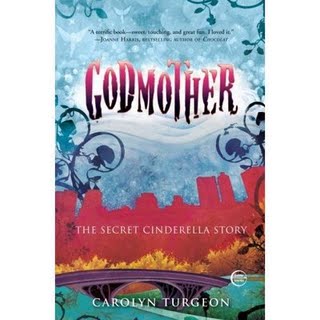
Godmother: The Secret Cinderella Story by Carolyn Turgeon Review


I was led to believe this was a fairy story. The cover, the back of the book, everything led me to believe this was a dark "sorta fairytale" I could sink my teeth into. Au contraire.
The Godmother, by Carolyn Turgeon is a look at the psychology behind a fairy godmother who not only falls in love with Prince Charming herself, but ultimately feels better suited for him as well.
Lil is a fairy godmother cast out of her rich, lustrous fairy world and forced to live her days disguised as an old lumpy woman on earth because she didn't fulfill her mission to unite Cinderella and Prince Charming. Every day she binds her wings painfully and looks for signs, glimpses that somewhere, her ethereal fairy sisters are still aware of her, coming for her.
Through a series of flashbacks, we see Lil's fairy world before she chose poorly, the clear lake the fairies sleep under, the exquisite rush of flying over the human world, the tantalizing look at first love when she sees Theodore (Prince Charming) for the first time and a hypnotizingly dark Cinderella who has more issues than we've been led to believe. These flashbacks reveal bits of the story and begin to parellel Lil's present situation in the "real world" when she decides to bring two lonely people together. She figures if she can help these two interesting people find each other, she will be forgiven and be allowed to return at last. She is tired, she is old and having to remain in the human world is a drudgery she can bear no longer.
This story should be silly. We're talking about fairies and Prince Charming and Cinderella. But it is deep and dark and sensual in its magic. I found myself whirled into a vast and beautiful world I had no desire to leave. I wanted desperately for Lil to return, to be her gorgeous fairy self again, to see Theodore, to find what was taken.
So how did it go wrong? I will not reveal the final chapter but found myself actually a little miffed that I had been manipulated so completely and I found myself in a bad mood for days. There was no magic, the climax was absolutely not worthy of the author's talents. I've read plenty of books I didn't like and then quickly forgot. But this book was in my top five favorites by the second to last chapter -- and then failed absolutely. I was ready to buy a copy for all of my friends and give it to my friends for Christmas. But this is not one I'll be recommending or reading again. Sigh. A real shame because I still want to go to the fairy world, I still want to see Theodore and I still want Lil to be the fire-haired goddess she used to be.
But this book shows you -- you can't have everything.
2 stars out of 5

Saturday, September 26, 2009

LOOKING FOR JOHN KEATS IN HAMPSTEAD!!


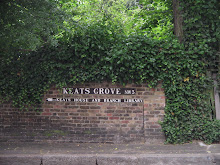
After fifteen years I finally find myself in his garden, in front of his house, on a solitary morning with only the National Trust men present for the reconstruction. But I cannot enter. It is closed. Everything is quiet, even the working men seem to be muted and all there is remains the sound of wind in the trees and the shushing after. I am here. Is he?


The view across from John Keats home.


The path outside the "Old Bull and Bush" where Lord Byron, John Keats, Sir Walter Scott, Leigh Hunt and Percy Shelley all came to eat, recite and enjoy themselves.


The neighborhood of Keats is still red brick and coal stains, narrow winding cobblestone streets and overgrown gardens in the foregrounds of mansions for the rich and famous.


The park across the street from his neighborhood.


The immortal trees of Hampstead.


FILM FRIDAY!!! BRIGHT STAR

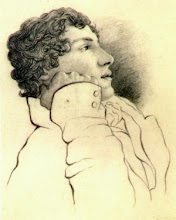
I don't remember many things very clearly anymore. The "who", "what", "when" and the "whys" get contaminated with years and memories of lessons learned. But I do remember the exact moment I fell in love with John Keats. I was in college, in Utah, the snow was heavy outside, the day dark and already moving into evening in the early afternoon. My professor told us the story of the young poet who lost his life to consumption at 25. She read some of his poetry. I have never been the same.

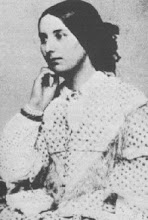
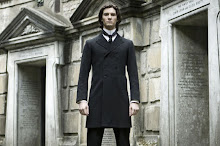
Jane Campion (writer and director of the Piano) is not one of my favorite film makers and Ben Wishaw was so convincing as the homosexual Sebastian in the new Brideshead Revisited that I was more than worried that together, they would ruin the passionately doomed romance of John Keats and Fanny Brawne. How wrong I was. To be fair, this is not the story of John Keats. Many of his most interesting moments are not even referred to. It is quite simply, the love story of he and Fanny Brawne, a girl his intellectual peers scoffed at and who Keats himself railed against in torturous love letters. For years Fanny has been villified as not being good enough for this gentle poet's most sincere anguish. Jane Campion changes that.

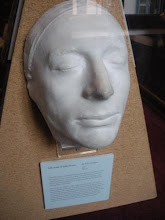
John Keats was an English poet in the early 1800's (1815-1820) who turned down life as a doctor to devote time to his passion and gift of poetry. Because he was from humble roots and not a Lord as poets were expected to be, he was brutally criticized and scoffed at by those who referred to him as the "cockney" poet. He nursed his wayward mother through her bout with consumption, and his younger brother. Tragically, Keats himself caught the ravaging illness and died at 25, alone, in Rome where friends believed he stood a better chance of healing. He died believing he was a failure, despite the fact that in less than a year, he would be a household name. However, at 22, John Keats met and fell in love with a handsome, coquettish young woman in the poet circle by the name of Fanny Brawne. Keats was absolutely madly feverish for Fanny but knew he could never provide for her, never marry her. When he began to show signs of illness, the two became engaged anyway and Fanny and her mother cared for John until the fatal trip to Rome.

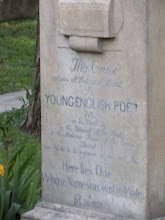
Campionn takes a few liberties and ignores a few hard truths (like the fact that Brawne frequently left Keats for weeks to attend parties and admire her own waist -- all this according to his very unbiased poet snob friends), but if a girl can't take a few liberties, why pass through history's painful moments again at all? I like how Campion did this film. I felt the looks, felt the kisses, cried my eyes out when they at last had to say their final goodbyes. Although Campion fudges Fanny's undying devotion in the post script, the film moved me deeply. The awful injustice of Keats's life and yet his incandescent splendor is wonderous and sometimes appalling. Campion does not show details of his death, of his suffering, nor does she show the infamous grave marker alone in Rome which Keats merely wished to say: "Here lies one whose name was writ in water..." This is the story of Fannny Brawne and how she loved and how she lost. Abbie Cornish does a masterful job and at last... at last! We have a little bit of Keats.